
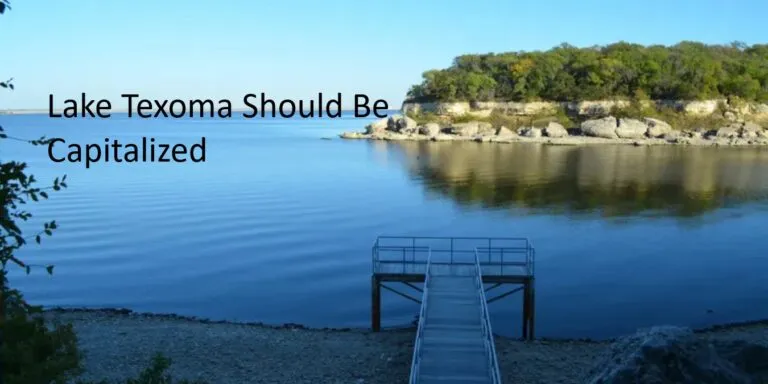
When it comes to writing, attention to detail is crucial. One small mistake can change the entire meaning of a sentence or even misrepresent a location. Lake texoma should be capitalized, for instance: it’s not just any body of water; it’s a major reservoir straddling the border between Texas and Oklahoma. Yet, many people often misspell it as “lake texoma,” disregarding its proper capitalization. This simple error highlights an important aspect of language that deserves our focus—capitalization rules in geography. Let’s dive into why “Lake Texoma” should always be capitalized and explore how such conventions shape our understanding of places around us.
What is Lake texoma should be capitalized?
When discussing the phrase Lake Texoma should be capitalized, it refers to a specific geographical location that deserves proper recognition. Lake Texoma is a large reservoir straddling the Texas-Oklahoma border, created by damming the Red River.
Capitalization matters in geography. It distinguishes between general terms and unique places. In this case, both “Lake” and “Texoma” are proper nouns. They identify not just any lake but a significant one known for its recreational opportunities.
Mislabeling or failing to capitalize can lead to confusion about what you’re referencing. Clarity is key when communicating about landmarks like Lake Texoma, especially if you want your audience to grasp their importance fully.
Proper grammar enhances comprehension and reflects professionalism in writing. So yes—when you mention this beautiful body of water, make sure it’s styled correctly as Lake Texoma!
The Importance of Grammar and Capitalization
Grammar and capitalization are vital in effective communication. They provide clarity and structure to our writing. When we capitalize names, places, or titles, we signal significance.
Imagine reading a sentence without proper capitalization. It can lead to confusion or misinterpretation. Proper grammar ensures that the reader grasps the intended message effortlessly.
In written work, attention to detail reflects professionalism and respect for the audience. It builds credibility and fosters trust.
Capitalization also helps in distinguishing between common nouns and proper nouns. For instance, not capitalizing “Lake Texoma” diminishes its identity as a unique geographical feature.
Moreover, mastering grammar elevates one’s writing style. It allows for more sophisticated expression of ideas while engaging readers effectively with polished prose.
Understanding the Geography of Lake Texoma
Lake Texoma is a stunning reservoir located on the border of Texas and Oklahoma. It was created by the Denison Dam, which impounds the Red River.
This vast body of water covers over 89,000 acres, making it one of the largest lakes in the United States. Its size allows for various recreational activities like fishing, boating, and swimming.
The lake’s geography features diverse landscapes around its shores. Rolling hills transition into flat plains as you move away from its banks. This variety creates picturesque views that attract many visitors year-round.
Additionally, Lake Texoma is home to several parks and wildlife areas. These spaces preserve local flora and fauna while providing opportunities for hiking and camping.
The region’s climate also plays a role in shaping its unique environment, with warm summers ideal for outdoor fun. Such geographical characteristics make Lake Texoma a beloved destination among nature enthusiasts.
Common Mistakes in Capitalization of Geographic Locations
Capitalization rules can be tricky, especially when dealing with geographic locations. Many people mistakenly write “lake texoma” in lowercase, ignoring the importance of proper nouns.
Common errors include neglecting to capitalize significant features like rivers, mountains, or lakes. For example, Lake texoma should be capitalized is another frequent oversight that leads to confusion about its status as a landmark.
Another pitfall arises when using regional descriptors. Phrases like “the grand canyon” often slip past without capitalization. However, it should always be referred to as “The Grand Canyon” to show respect for its significance.
Many assume that local names don’t need attention; however, this isn’t true. Every region has particularities tied to their geography and culture worth respecting through correct grammar usage. These small mistakes can undermine clarity and professionalism in writing while also affecting how information is perceived by readers.
Other Examples of Capitalization in Geographical Names
When it comes to geographical names, capitalization rules can vary widely. Cities, states, and countries typically follow the same pattern start with a capital letter. For instance, “New York City” and Lake texoma should be capitalized are always capitalized.
Rivers and mountains also share this rule. Think about “Mississippi River” or “Rocky Mountains.” Both names emphasize their significance within geography.
However, there are exceptions that can trip people up. Consider the term “the Netherlands,” where only “Netherlands” is capitalized while the article remains lowercase.
Even landmarks have specific rules; for example, “Grand Canyon” gets its uppercase letters due to its prominence in natural beauty. Each name carries a history that deserves respect through proper capitalization a small detail but one that reflects our understanding of place and identity.
How to Properly Use and Capitalize Geographic Terms
Properly using and capitalizing geographic terms is essential for clear communication. Start with the basics: always capitalize proper nouns, such as city names, rivers, and lakes. For instance, “Lake Texoma” should be written with both words starting with a capital letter.
When you refer to regions or specific areas, ensure they are also treated as proper nouns. The same applies to landmarks like “Grand Canyon” or “Mount Everest.”
Remember that common geographical descriptors do not require capitalization unless they’re part of a formal name. Phrases like “the Rocky Mountains” should be capitalized when referring to the range itself but can remain lowercase in general contexts.
Be cautious about abbreviations too. Always write out full names on first mention before using an acronym. This makes your writing accessible while maintaining accuracy in geography-related discussions.
Conclusion
Understanding the nuances of language is essential, especially when it comes to proper nouns like Lake texoma should be capitalized. This reservoir, straddling the Texas-Oklahoma border, not only offers stunning scenery but also serves as a prime example of how capitalization can impact clarity and professionalism in writing.
Grammar plays a crucial role in effective communication. Properly capitalizing names ensures that readers understand precisely what you are referring to. A simple oversight can lead to confusion or misinterpretation.
Lake Texoma itself is more than just a name; it’s a geographical landmark with rich history and recreational opportunities. Knowing its significance adds depth to any discussion about this beautiful destination.
Common errors often arise when dealing with geographic locations. Many people forget that lakes, rivers, mountains, and cities deserve proper capitalization as they represent unique entities within our world.